

Counterfeit Money Price
Add a review FollowOverview
-
Founded Date June 13, 1947
-
Sectors Injectables Formulation
-
Posted Jobs 0
-
Viewed 2
Company Description
14 Smart Ways To Spend Your On Leftover Fake Currency Budget
The Shadowy World of Fake Currency: Understanding Counterfeiting
Counterfeiting is a classic crime that has actually developed alongside money itself. From ancient coins to contemporary digital currencies, the act of producing and distributing fake currency has actually seen ingenious techniques, sustained by advances in innovation and need. This article explores the world of fake currency, examining its history, contemporary strategies, effect on economies, and the steps being taken to fight this ongoing concern.
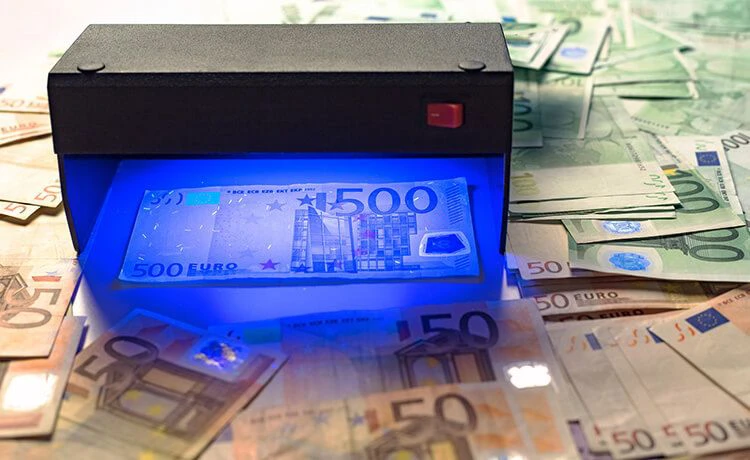
Table of Contents
- A Brief History of Counterfeiting
- Common Forms of Fake Currency
- Techniques Used in Counterfeiting
- Impact of Counterfeiting on Economies
- Preventive Measures Against Counterfeiting
- Regularly Asked Questions
A Brief History of Counterfeiting
Counterfeiting has roots that stretch back thousands of years. Ancient civilizations such as the Romans faced the challenge of fake coins, made from inferior metals and developed to trick merchants. In the 17th and 18th centuries, the development of paper currency opened up brand-new opportunities for counterfeiters, as it ended up being easier to reproduce paper than to mint coins.
Below is a timeline highlighting significant moments in the history of counterfeiting:
| Year | Occasion |
|---|---|
| 600 BC | First known coins minted in Lydia. |
| 1690 | First paper currency released in North America. |
| 1861 | U.S. begins releasing its very first paper currency. |
| 1920 | The Secret Service formally takes up the role of combating counterfeiting. |
| 1990s | Intro of sophisticated printing technologies. |
| Present | Increasing elegance in digital counterfeiting. |
Typical Forms of Fake Currency
Counterfeit currency appears in many forms, each with its distinct qualities and methodologies. Some common types include:
-
Fake Banknotes: These are unapproved replicas of legitimate paper currency. They can range from poor-quality recreations to state-of-the-art facsimiles created to be equivalent from authentic notes.
-
Digital Currency Counterfeits: As digital currencies gain popularity, so has the occurrence of counterfeit digital assets. This includes deceptive cryptocurrency schemes and initial coin offerings (ICOs).
-
Modified Currency: This involves legitimate banknotes that are become increase their face worth, typically done by altering digits or obliterating parts of the note.
-
Confidence Tricks: These rip-offs, while not standard counterfeiting, use fake currency in the guise of payment to scam individuals or businesses.
Strategies Used in Counterfeiting
Counterfeiters use various strategies that develop as technology modifications. The following are some of the most common methods:
1. Printing Techniques
Counterfeiters exploit high-quality printers and scanners to replicate currency. These can include techniques such as:
- Offset printing: A common strategy used by numerous printers, permitting color reproduction.
- Digital printing: Simple and rapid, often producing high-quality reproductions.
2. Counterfeit Plates
Advanced counterfeiters may use engraving strategies comparable to those used by the U.S. Bureau of Engraving and Printing, allowing for the production of more persuading notes.
3. Holography and Color Shifting Ink
Initially utilized in banknote security functions, if counterfeiters can reproduce these features, it significantly increases their opportunities of success.
4. Falschgeld Kaufen Online Trading Platforms
Some counterfeits are produced through fraudulent trading or exchange platforms that promise legitimate currencies.
Impact of Counterfeiting on Economies
The results of counterfeiting are profound and diverse, affecting companies, customers, and whole economies. Some significant effects consist of:
- Economic Loss: Governments and companies worldwide lose billions each year due to counterfeiting activities.
- Erosion of Trust: Consumers may lose faith in currency and monetary systems, impacting costs and financial investment habits.
- Increased Crime: Counterfeiting is frequently linked to other criminal activities, consisting of drug trafficking and organized crime.
- Inflation: Significant varieties of fake notes can result in an inflationary result, undermining the value of genuine currency.
Here’s a table illustrating some vital data on counterfeiting by region:
| Region | Estimated Annual Losses Due to Counterfeiting |
|---|---|
| The United States and Canada | ₤ 200 billion |
| Europe | ₤ 150 billion |
| Asia | ₤ 180 billion |
| Africa | ₤ 50 billion |
| South America | ₤ 70 billion |
Preventive Measures Against Counterfeiting
Governments and institutions have developed a number of strategies to combat counterfeiting, including:
-
Advanced Security Features: Incorporating complicated security features such as watermarks, microprinting, and security threads in banknotes.
-
Public Awareness Campaigns: Educating citizens about how to recognize genuine banknotes and report counterfeit activities.
-
Legislation and Enforcement: Stricter laws against counterfeiting and harsher charges for those associated with the production and distribution of fake currency.
-
Cooperation with Technology Firms: Partnering with tech business to establish advanced detection tools to spot counterfeits more effectively.
-
Training and Resources for Law Enforcement: Ensuring that police and customs officers are well-equipped to identify and react to counterfeiting efforts.
Often Asked Questions
Q1: How can I acknowledge counterfeit money?A1: Look for distinct security functions such as watermarks, color-shifting ink, and microprinting. Feel the texture of the note and look for embossed printing.
Q2: What ought to I do if I get fake currency?A2: Report it
to regional authorities or monetary organizations instantly. Do not try to pass it off as genuine.
Q3: Is counterfeiting a federal crime?A3: Yes, in numerous countries, consisting of the United States, counterfeiting is dealt with as a major federal offense with substantial penalties. Q4: Can cryptocurrencies be counterfeited?A4: Traditionalcounterfeiting of cryptocurrencies is uncommon, however
fraudsters can produce fake exchanges or deceptive ICOs to defraud financiers. Q5: What are the financial repercussions of counterfeiting?A5: Counterfeiting can lead to substantialeconomic losses for companies, weaken trust in financial markets, and add to inflation. Counterfeiting continues to be a pushing concern in worldwide economies, evolving with technological advances
and the altering landscape of currency itself. Awareness, avoidance, and enforcement stay crucial in tackling this illicit activity. As both the general public and authorities work together to fight counterfeiting successfully, the hope is for a more safe and secure monetary future, complimentary from the shadows of fake currency.